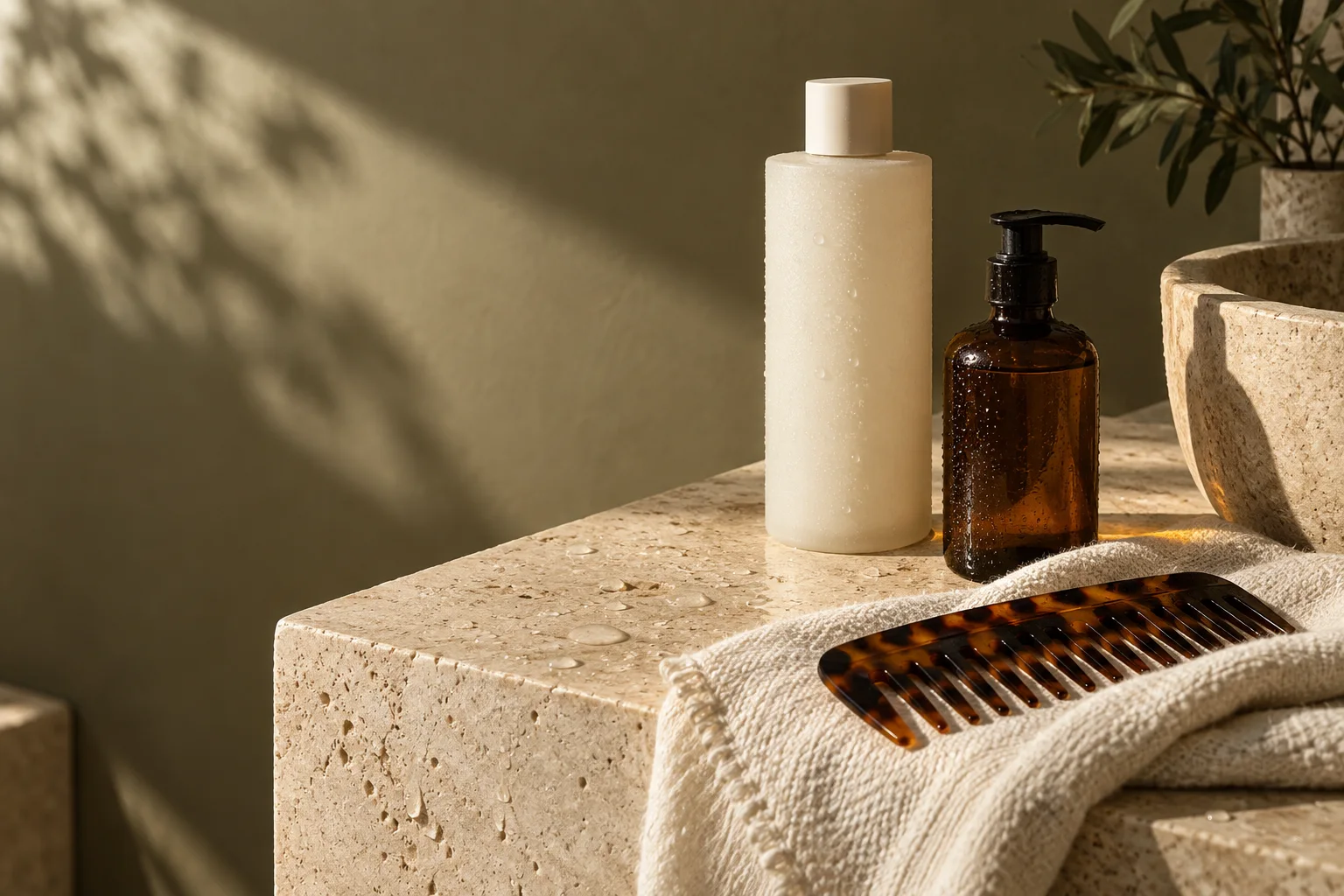
Match detangling timing to your hair, work gently from the ends, and separate a tool advertisement from evidence that you need a new tool.
The question a short video can leave out
“Always brush wet” and “never comb wet” sound decisive. Neither tells you whose hair is being discussed. Before copying a routine, ask whether the creator is describing straight hair or thick, curly hair, whether conditioner is still present, and whether they mean a brush or a comb. Those details change the advice.
This is a researched guide to everyday handling, not a test of detangling tools. We have not compared brushes or measured breakage. The practical notebook below is an original way to keep observations separate from advertising claims.
What the dermatology guidance actually distinguishes
The American Academy of Dermatology recommends a wide-tooth comb for wet detangling because wet hair is delicate. For straight hair, it advises allowing some drying before combing. For thick, curly hair, it points to combing in the shower while conditioner remains in the hair. Start with the ends and gradually work higher, moving slowly. Read the AAD’s complete guidance.
These are general distinctions, not a personalised instruction for every texture, extension, protective style or scalp condition. Follow any individual advice from your clinician or qualified stylist.
Make a three-line detangling note
At your next ordinary wash, record three things: the state of your hair when you started, the tool you used, and the part of the process that felt difficult. Keep the wording concrete. “Ends tangled before I began” says more than “my hair was bad.” “I rushed because I was late” records something a product purchase cannot explain away.
For example, a fictional entry might read: “Straight hair, partly dry; wide-tooth comb already owned; the back section took most of my time.” Another might read: “Thick curls, conditioner still in; existing comb; I could not see the lower section easily.” These are sample notes, not testimonials or proof of results.
You do not need to count hairs, photograph yourself or buy a tracking app. The point is to identify one clear question: am I unsure about timing, access to a section, or the tool itself? Our routine notebook can help you organise a simple routine.
Read a brush claim as a question
If an advertisement promises “less breakage,” ask: compared with what, under what conditions, and measured how? A demonstration on someone else’s hair is not an outcome measured on yours. Look for a clearly described comparison rather than treating a smooth-looking clip as a guarantee.
Before spending, write the job you expect a new tool to do and what is wrong with the one you own. If that sentence is still vague, you can leave the purchase undecided. If you do compare options, check the actual price, return conditions and intended use; this article does not endorse a particular model or retailer.
The useful next step is modest: understand the timing distinction, observe your existing routine, and make any buying decision answer a specific need. A more expensive brush is not evidence that the rest of the routine has been considered.
Sources & editorial notes
- American Academy of Dermatology — Tips for healthy hair ↗
Checked September 15, 2026; source updated August 12, 2024. Supports the wide-tooth-comb, timing and ends-first summary. Notebook examples and purchase questions are original editorial material. This article has not been medically reviewed.
Prepared with AI assistance and checked against the listed sources. This is not a hands-on product review or a dermatologist-reviewed article. Last substantive review: September 15, 2026.