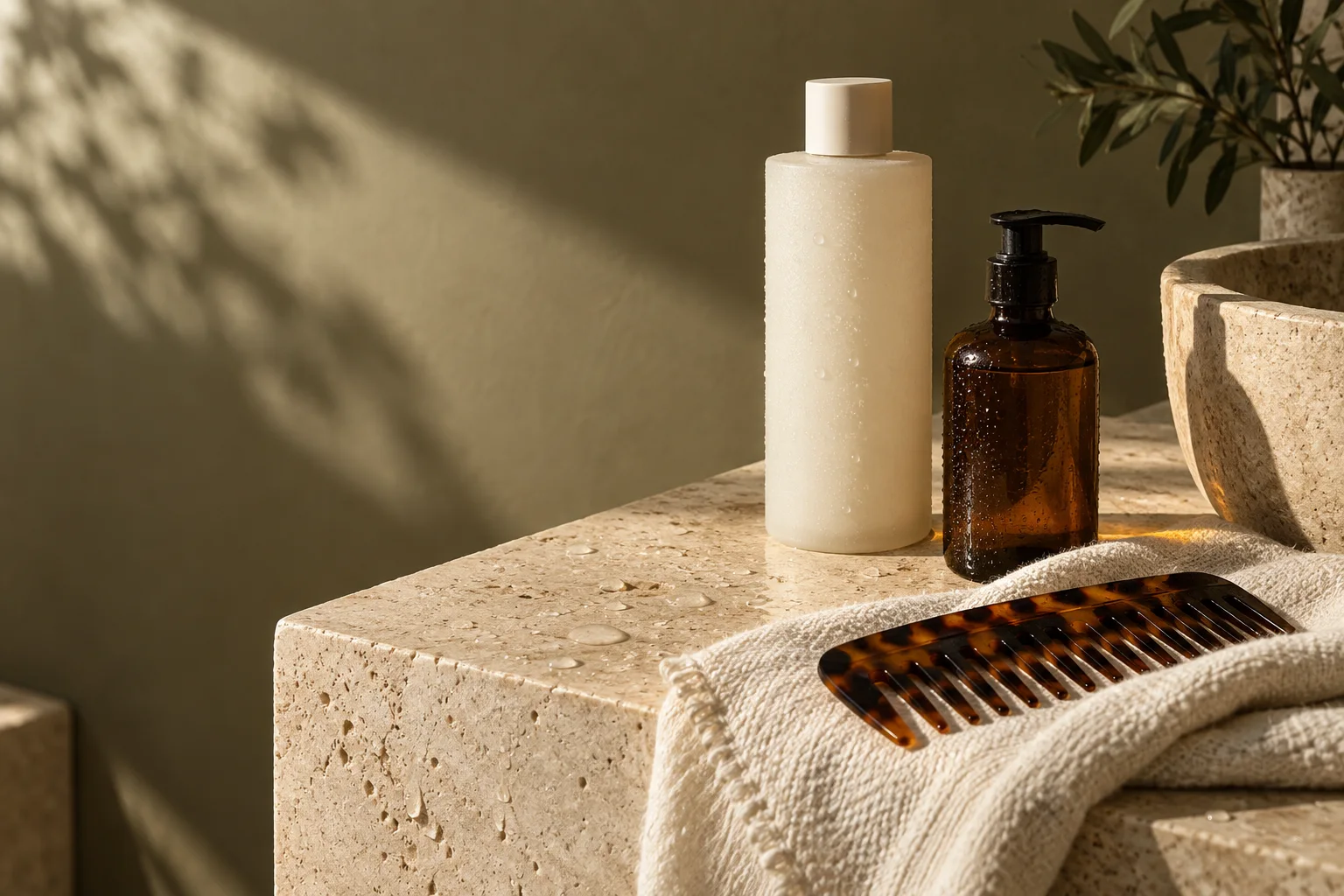
Check the product instructions, storage spot and bottles already open before deciding whether a backup earns its place.
A discount is only one part of the decision
A familiar conditioner goes on sale. Buying a second bottle seems sensible, until you remember the half-used mask, the travel-size alternative and the bottle at the back of the cupboard. Before comparing discounts, count what you already own.
This is a planning exercise, not a test of whether an old product is safe. We have not tested the products in your bathroom, and a generic article cannot assign them an expiry date.
What storage guidance actually establishes
The US Food and Drug Administration explains that cosmetic shelf life depends on the product, its use and its storage. Moisture can support microbial growth; heat can affect preservatives. It recommends clean containers and applicators and avoiding hot storage locations such as cars. Manufacturers are the right contact for product-specific shelf-life information. Read the FDA guidance.
This source is a US regulator. We use its general storage information here, not its US labelling rules as a statement of Canadian law. Follow the instructions on the particular product sold to you; this guide gives no universal number of months for shampoo or conditioner.
Make a four-column shelf note
Write four headings: product, opened on, instructions, and next decision. Under product, include the size and exact variant. Under opened on, use the date if you know it; write “unknown” if you do not. Do not turn an estimate into a confident record.
Under instructions, copy the relevant wording from the packaging rather than a social-media rule. Photograph the label for your own reference if the print is hard to revisit. Under next decision, choose a practical action: read the instructions, ask the manufacturer a question, or postpone another purchase. An opening-date note helps organise information; it does not certify that the contents remain suitable.
Give the backup a job
Ask which existing bottle the backup would replace. If the answer is vague, leave it off the shopping list for now. If it replaces a regular purchase, ask whether the size fits your actual routine and whether you have an appropriate place to keep it. Follow any product-specific storage directions.
Our cost-per-use calculator compares price, size and an assumed amount per use. It cannot assess shelf life or predict how much you will discard. For example, a lower calculated cost is conditional on using the quantity in your comparison; it is not proof that the larger pack is the better purchase for you.
A useful question for a manufacturer is: “I have this exact product and the storage instructions are unclear. What storage conditions and shelf-life guidance apply?” Include the product name and batch details when contacting its official support privately. There is no need to post your order information in a public comment.
A small task for the next shop
Choose one product category today. Count the bottles already open, write down what you know, and make the next purchase decision from that list. The result may simply be that you do not need a backup yet.
This checklist is original editorial planning advice. It is not a product ranking, medical assessment or hands-on review, and contains no affiliate links.
Sources & editorial notes
- FDA — Shelf Life and Expiration Dating of Cosmetics ↗
Checked September 18, 2026. US source used for general storage principles only. Inventory worksheet and purchase questions are original editorial material.
Prepared with AI assistance and checked against the listed sources. This is not a hands-on product review or a dermatologist-reviewed article. Last substantive review: September 18, 2026.