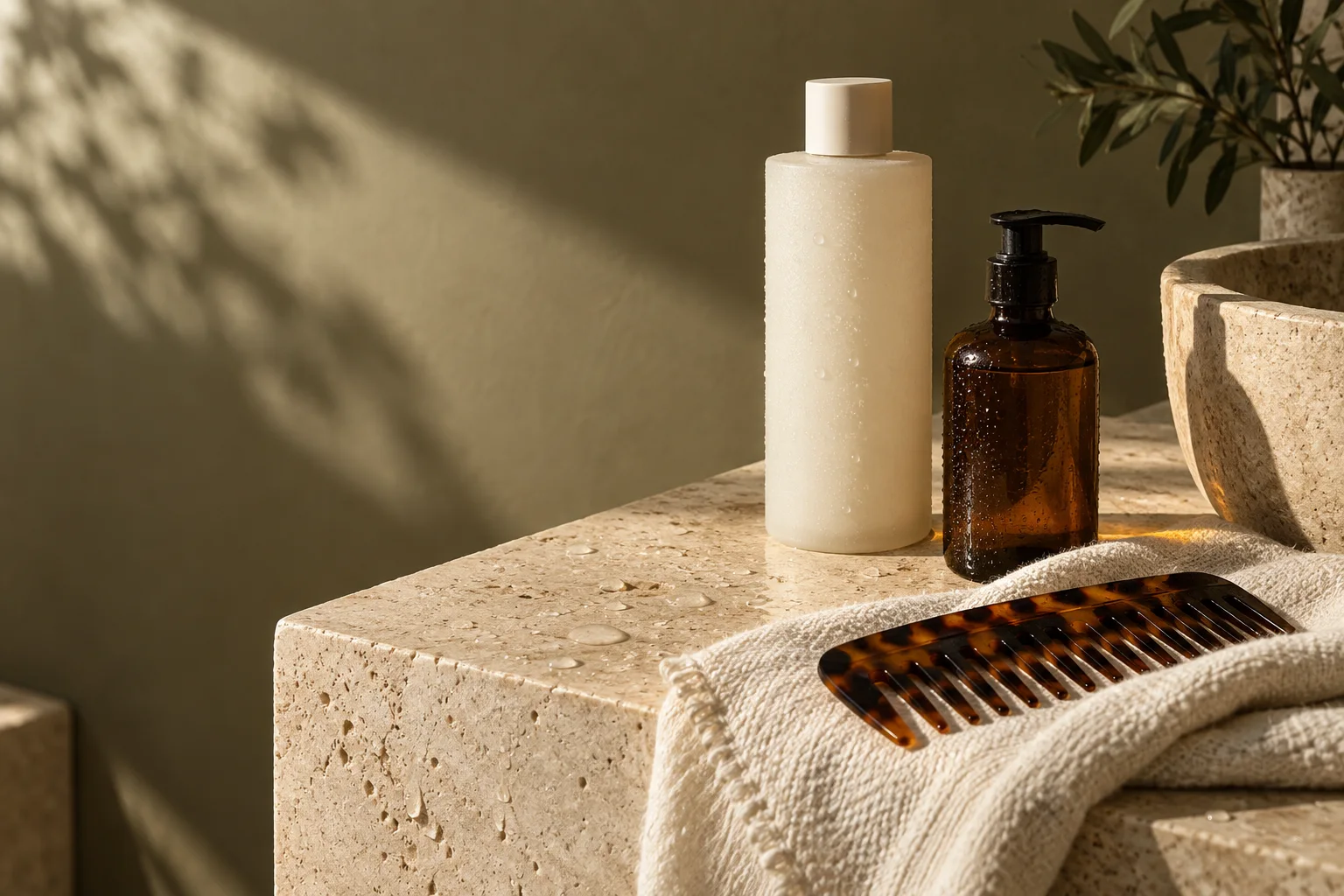
Focus on absorbing water rather than rubbing your hair. A material name alone does not prove a towel prevents damage.
Look at the movement before the material
Shopping for a hair towel can quickly become a comparison of fabrics, promises and before-and-after photographs. There is a simpler starting question: what do you actually do with the towel after washing?
This guide separates an everyday handling habit from a product recommendation. We have not tested towels, timed drying sessions or measured breakage. No brand or fabric wins a comparison that we have not performed.
The source makes a specific distinction
The American Academy of Dermatology lists rubbing hair with a towel among habits that can damage it. Its suggested alternative is to wrap hair in a towel to absorb water and let it air dry. It also advises seeking dermatology help for concerns about thinning or hair loss. Read the AAD guidance.
That advice supports a change in handling. It does not establish that a particular premium towel repairs hair, prevents every kind of breakage or produces faster growth. This is general educational guidance, not an assessment of your hair or scalp.
Separate three different shopping questions
First, ask about handling: are you repeatedly rubbing the lengths back and forth? Second, ask about convenience: do you want a towel that is easier to fit into your morning routine? Third, ask about evidence: what supports the outcome promised in the listing?
These questions are related, but they are not interchangeable. A fastening feature may be convenient without demonstrating a medical benefit. A fabric description can tell you what something is made from without establishing how much faster your own hair will dry.
If a seller gives a percentage improvement, look for the comparison, testing conditions and measurement. Faster than what, used how, and measured where? If that information is missing, keep the claim marked as unverified rather than filling in the gaps yourself.
Make the next wash a small observation
Write one sentence in your routine notebook: “My towel step is for absorbing water.” Notice whether your usual motion matches that purpose. You do not need a basket of new products to identify the step you want to change.
If you later compare towels, make a short requirements list: suitable dimensions, clear care instructions and a price you are comfortable paying. Treat this as a convenience purchase decision, not a promise of hair repair. We are not recommending a particular material, fastening method or wrapping time.
A single wash is not an experiment that proves long-term results. Avoid interpreting ordinary day-to-day differences as evidence that one accessory caused or cured a problem. Questions about ongoing hair loss belong with a qualified clinician, rather than a towel review.
Sources & editorial notes
- American Academy of Dermatology — How to stop damaging your hair ↗
Checked September 18, 2026. Towel-handling advice and clinical boundary summarised; shopping questions are original editorial guidance. Not medically reviewed.
Prepared with AI assistance and checked against the listed sources. This is not a hands-on product review or a dermatologist-reviewed article. Last substantive review: September 18, 2026.